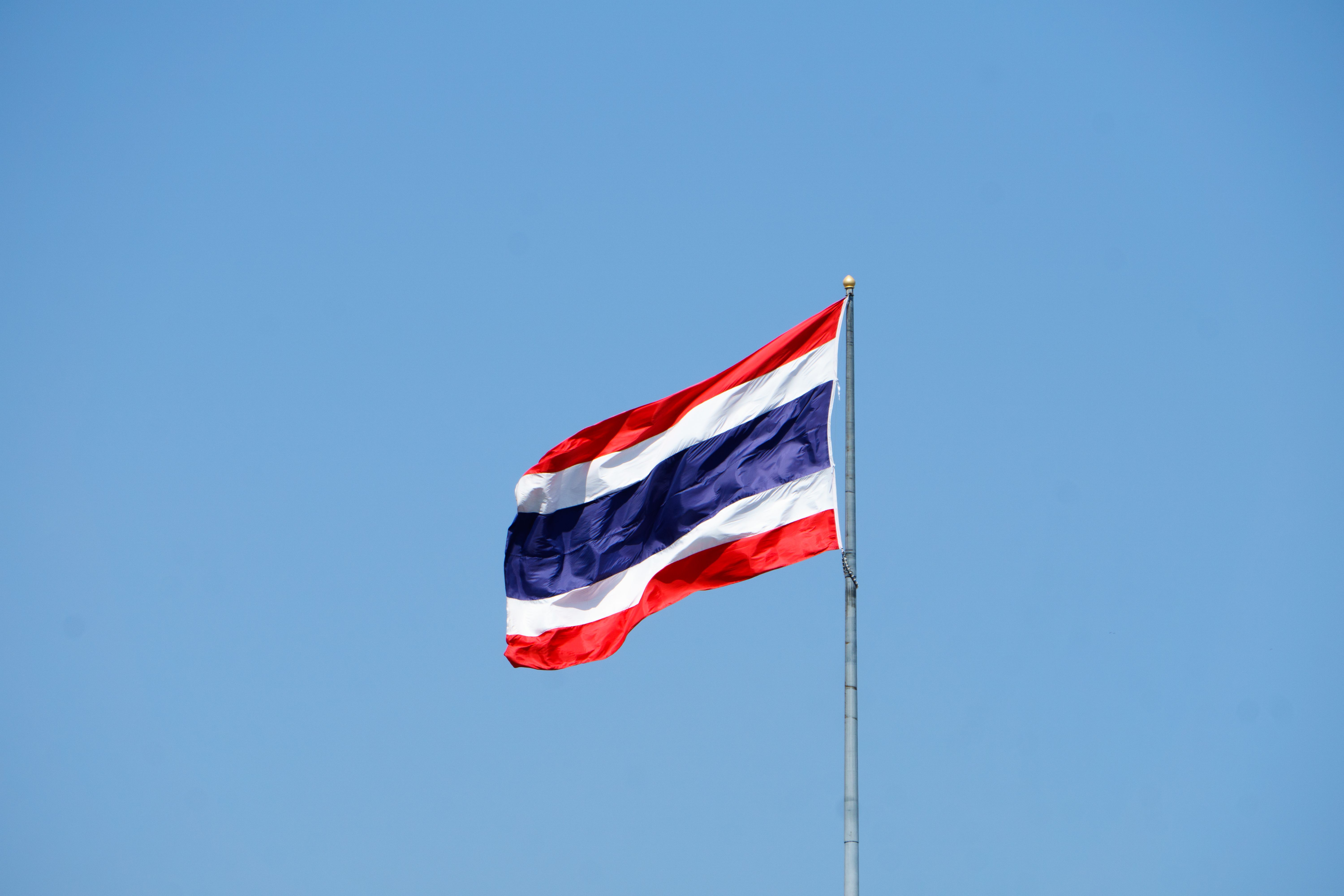
Thailand has approved a massive tourism and entertainment complex in the Eastern Economic Corridor (EEC), valued at up to THB700 billion ($22.56 billion). The project is central to the government’s strategy to stimulate economic growth and expand its tourism sector.
Deputy Prime Minister and Transport Minister Phiphat Ratchakitprakarn confirmed that the EEC board will review the proposal this week before submitting it to the Cabinet. He emphasised that the complex will exclude casinos, in line with government policy priorities and campaign pledges.
Prime Minister Anutin Charnvirakul’s administration is targeting GDP growth of around three percent in 2026, fuelled largely by infrastructure and tourism. The new hub is envisioned as a man-made destination capable of drawing up to 40 million visitors annually.
Tourism data underscores the challenge: Thailand welcomed 32 million international visitors in 2025, a 7.23 percent decline from 2024’s 35.55 million. Monthly arrivals ranged from 2.24 million in September to 3.71 million in January, with hotel occupancy peaking at 78 percent in December, according to the 2025 Thailand Tourism Statistics.
Established in 2014, the EEC spans Rayong, Chonburi, and Chachoengsao provinces, with links to Bangkok and Samut Prakan. It is widely regarded as Thailand’s prime gateway for logistics, manufacturing, and tourism.
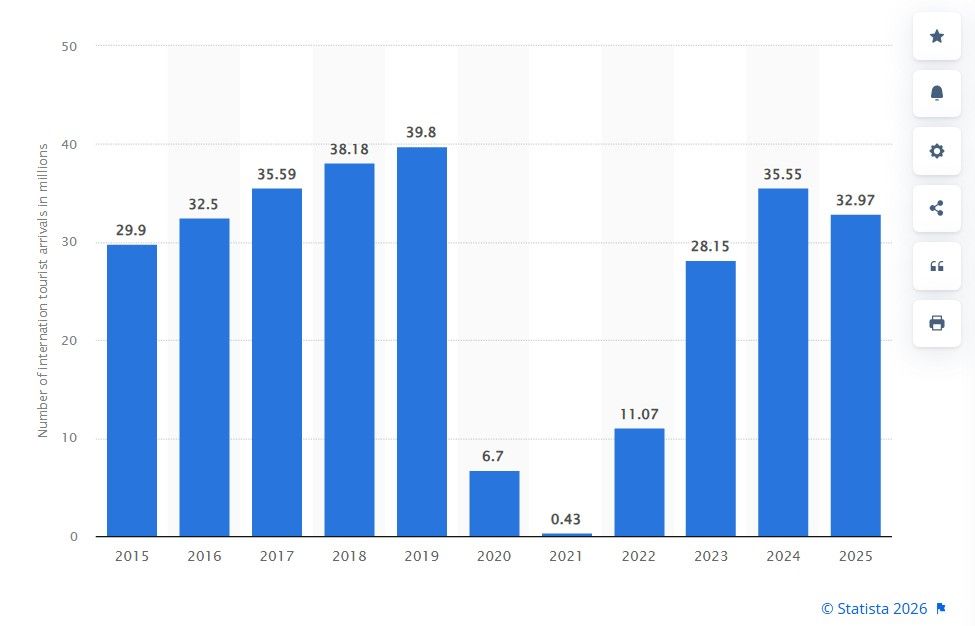
International arrivals in Thailand 2015-2025 (Source: Statista)
Plans include sports facilities, world-class theme parks, expansive retail zones, and advanced medical centres, forming part of a new urban cluster. The EEC also aims to develop at least 15 smart cities by 2027, integrating digital infrastructure, energy efficiency, and modern transport systems.
Covering 15,000 rai (24 million square metres), the site will dedicate 5,000 rai (8 million square metres) to sports and theme park facilities. No industrial factories will be permitted within the zone, reinforcing its focus on tourism and lifestyle.
The project is expected to accelerate related investments, including a high-speed rail line connecting three airports, expansion around U-Tapao Airport, and sports-related facilities worth THB350 billion ($11.28 billion). Transport and airport development is projected at THB300 billion ($9.6 billion).
The Three-Airport Rail Project will link Don Mueang, Suvarnabhumi, and U-Tapao airports along a 220 km line with nine stops, connecting Bangkok to Rayong. It is slated to open by 2029.
According to Thailand’s Public Relations Department, from January to October 2024, foreign investment in the EEC reached THB45.7 billion ($1.47 billion), a 146 percent increase compared to 2023. Japan led the group, contributing THB16.2 billion ($520 million).
In early 2025, foreign investors in the EEc rose 40 percent year-on-year, accounting for 30 percent of all foreign investors in the country during the period, as reported by local media, The Bangkok Post.
In February, Ratchakitprakarn revealed discussions about a “Disneyland Thailand-style” development under a public-private partnership. The project would leverage the EEC’s proximity to Bangkok, Pattaya, and Rayong, alongside its airports, rail networks, and ports.
Earlier casino-based proposals under previous administrations failed to advance, reinforcing the current government’s casino-free approach.
However, residents in Prachin Buri province staged protests both supporting and opposing its proposed inclusion in the EEC. Critics argued that the expansion would benefit investors more than locals, citing land use and community impact, as reported by local media outlets.
#EEC #TourismDevelopment #Infrastructure #AsiaPacific #EconomicGrowth #Hospitality #SmartCities #Investment #TravelIndustry

Welcome to Gambling Consulting Authority (GCA) - Your Strategic Partner in Gambling Industry Advancement