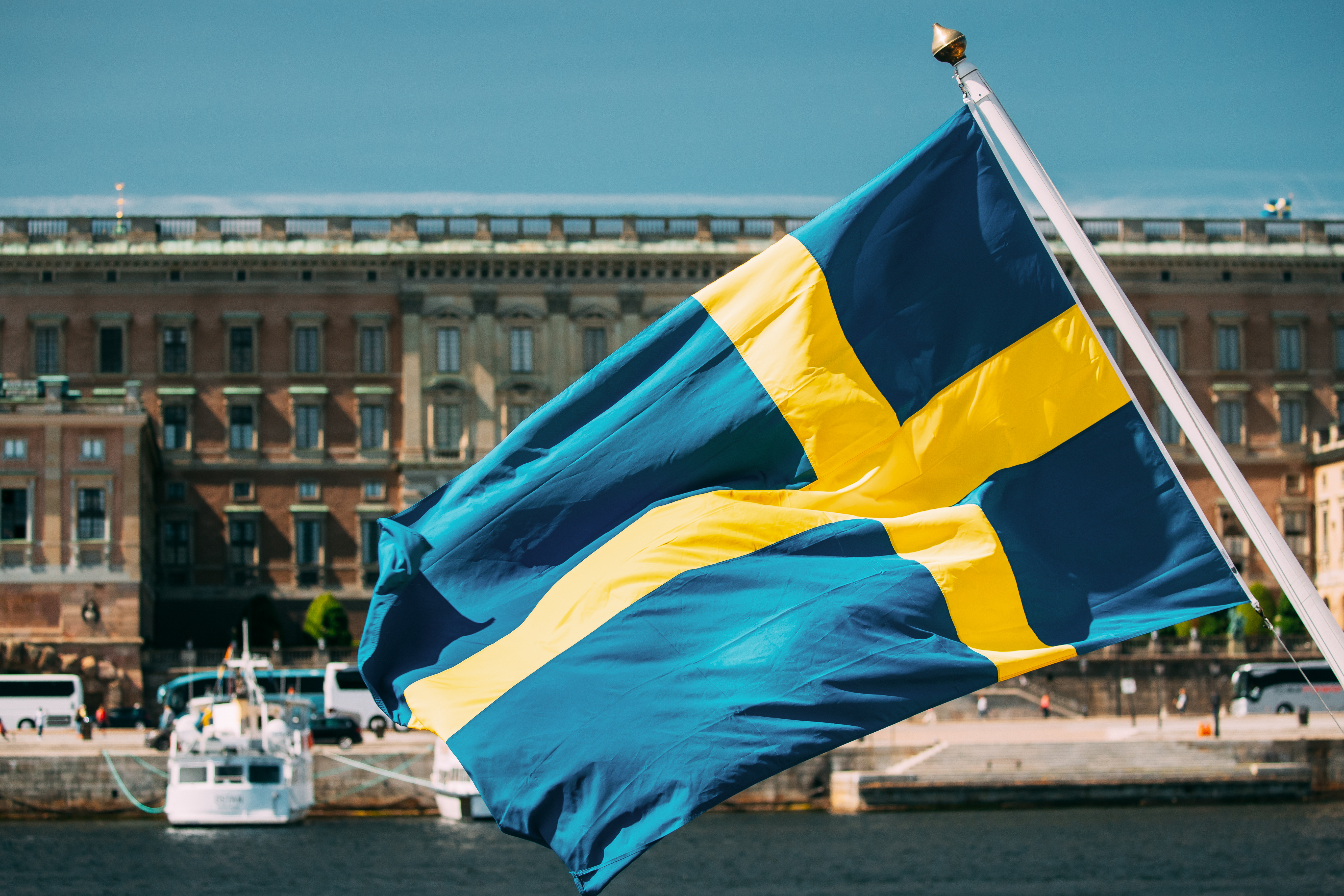
Sweden’s licensed gambling market grew only modestly last year, with the online segment lifting the total even as state-run products declined. A higher gambling tax introduced in 2024 is increasingly shaping operators’ margins and the policy debate.
Spelinspektionen, the Swedish Gambling Authority, said operators with a Swedish licence generated net revenue of SEK28.2bn (€2.64 billion) in 2025, up only 1.3% on 2024. Online gambling continued to make up the largest share. “Commercial online gambling and betting turned over just over SEK18 billion (€1.68 billion), which is an increase of 3.3 percent,” the authority noted.
Spelinspektionen’s figures show online products accounting for most of the growth. The regulator said online gambling and betting “turned over just over SEK18 billion (€1.68 billion)”, while land-based commercial gambling, “mainly casino games in restaurants”, reached SEK263m (€25 million), up 9.6% year on year.
The quarterly table published by the regulator underlines how small that retail segment remains compared with online play: restaurant casinos took SEK74m (€7 million) in the final quarter, against nearly SEK5bn (€468 million) online.
State-run products moved the other way. “Turnover for state lotteries and value machines decreased by 3.4 percent,” Spelinspektionen noted. Those products ended the year at SEK5.528bn (€517 million), with a noticeable lift in the fourth quarter to SEK1.522bn (€142 million).
The figures also capture the end of an era for Sweden’s last land-based casino, closed in 2025. Net revenue from the state-owned Casino Cosmopol was SEK34m (€3.1 million) for the full year, with SEK26m (€2.4 million) booked in the first quarter and SEK8m (€0.75 million) in the second, and zero recorded in the third and fourth quarters.
Charity-linked gambling posted a stronger finish. National charity lotteries brought in SEK1.204bn (€112.6 million) in the fourth quarter, lifting the full-year total to SEK3.759bn (€351.7 million). Hall bingo remained a small slice of the market at SEK201m (€18.8 million) for the year.
Spelinspektionen said the fourth quarter was stronger overall than a year earlier. “During the fourth quarter of 2025, turnover for gambling companies with a Swedish gambling licence amounted to SEK7.8 billion (€729.8 million), which is an increase of 2.6 percent compared with the corresponding quarter in 2024,” it said.
But perhaps the most telling trend was not financial. The authority said that by the end of the year’s final quarter around 134,500 people were registered as self-excluded through Spelpaus.se, Sweden’s national system for blocking access to licensed gambling. “That is an increase of just over 3 percent compared with the previous quarter,” the regulator said.
In February, ATG, the long-established horse-racing betting operator, reported a weaker year and put taxation at the centre of its explanation. In a press release accompanying its annual results, ATG’s chief financial officer and deputy chief executive, Lotta Nilsson, said: “Both the lower revenues and the increased gambling tax hit the return to our owners directly and thus weaken the financing of the horse racing sector.” She added: “It is a development we take seriously.”
The gambling tax rise in 2024 has been cited repeatedly by online operators as evidence that the licensed market is being asked to shoulder higher costs while still competing with unlicensed sites.
That argument has been sharpened by the industry’s wider worry about channelisation. In an interview with SiGMA News, Gustaf Hoffstedt, head of BOS, the Swedish Trade Association for Online Gambling, summed up the stakes in one line: “Consumer protection is completely worthless if the consumers are not present,” he said, arguing that tougher restrictions can backfire if they make licensed sites less attractive than offshore rivals.
For ministers and regulators, the challenge is that almost every policy lever pulls in two directions. Tighten rules and costs, and the licensed market risks losing ground. Loosen them, and the political promise of stronger consumer protection starts to fray.
#Sweden #GamblingIndustry #OnlineBetting #Regulation #GamingMarket

Welcome to Gambling Consulting Authority (GCA) - Your Strategic Partner in Gambling Industry Advancement