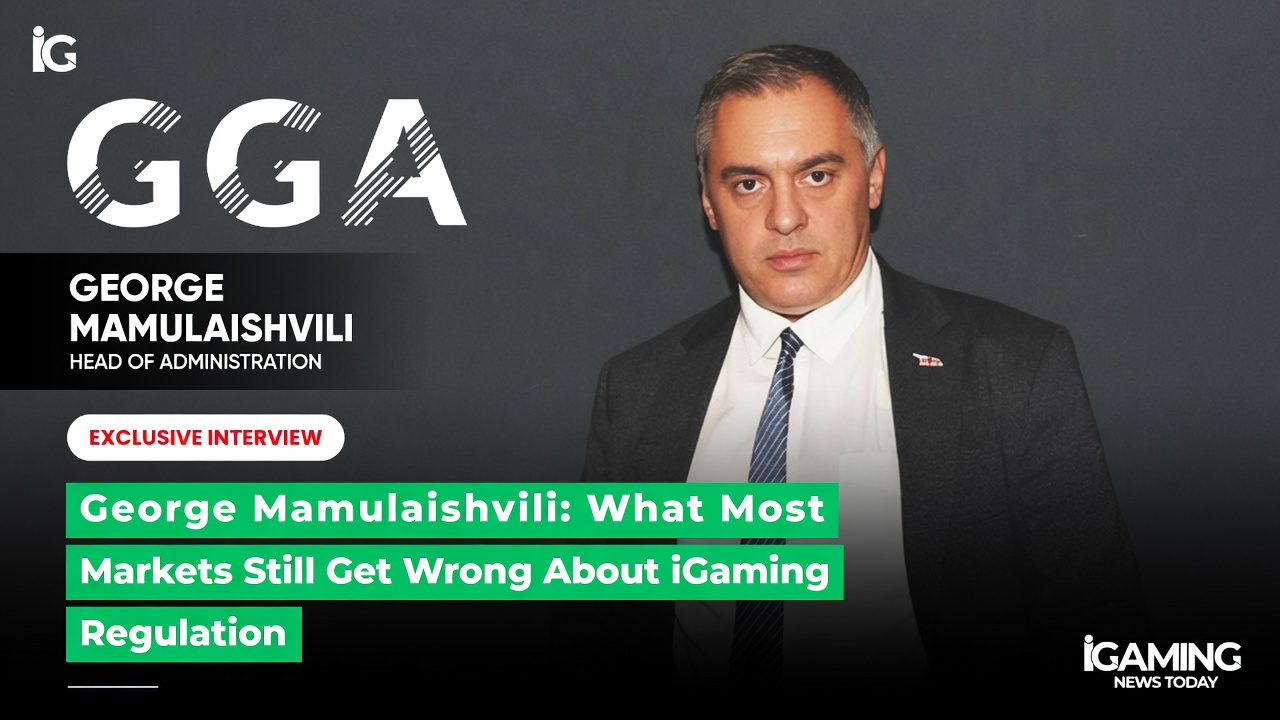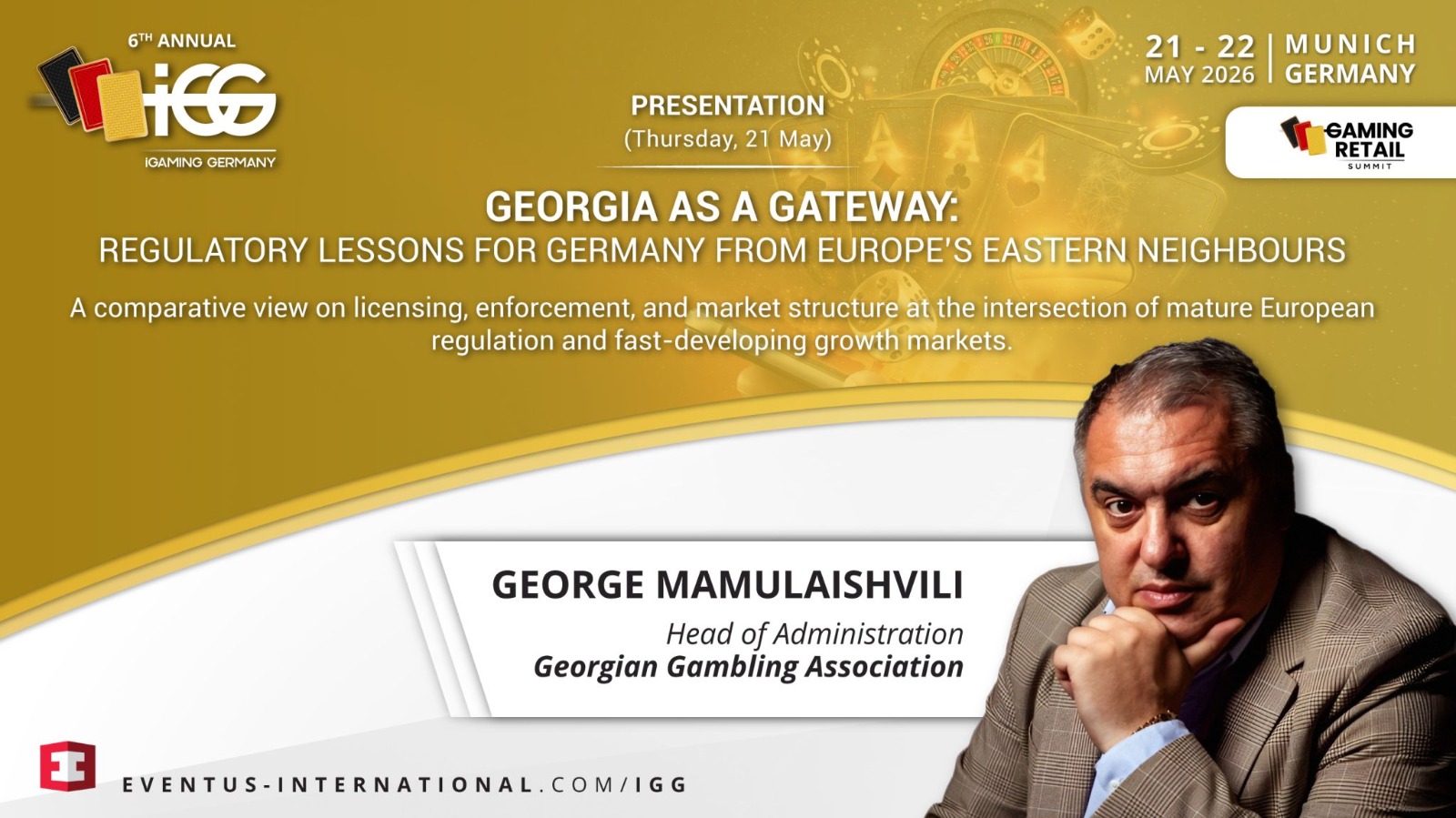
At the Eastern European Gaming Summit (EEGS) 2025, George Mamulaishvili, Head of Administration of the Georgian Gambling Association (GGA), took part in a high-level regulators’ panel discussion focused on the current state and aafuture trajectory of national iGaming markets across Eastern Europe. Speaking within a Q&A-format panel dedicated to market metrics, regulatory developments, and innovation, George Mamulaishvili outlined Georgia’s regulatory journey, key performance indicators, and the strategic vision positioning the country as a regional gaming hub bridging Europe and Asia.
He then expanded on these themes, providing sharper insight into how policy, performance, and innovation are converging to define the market’s trajectory.
The Georgian iGaming Market Today
Gambling in Georgia has a long and established history. The modern regulated market began to take shape in 2005, when gambling was legalized and the industry started its formal development. Since then, the sector has gone through several legislative transformations aimed at balancing growth, transparency, and state control.
A major milestone came in 2011, when clearer and more structured regulations were introduced. These rules significantly accelerated market development and attracted the attention of major international operators, including Entain, Flutter, and Betsson Group.
Another substantial shift occurred in 2022, when new regulatory changes intensified competition and reshaped operator behavior. Most recently, in 2024, Georgia introduced a dedicated tax regime for companies operating with foreign players. Under this framework, offshore-focused operators are subject to a 5% GGR tax, while player withdrawals are not taxed. Operators are also permitted to use EUR, USD, and cryptocurrency, further enhancing Georgia’s international competitiveness.
Today, Georgia’s gambling ecosystem includes 126 licensed entities:
And 51 live studios and game providers, such as SmartSoft, Spribe, and Lambda Gaming
Despite stricter regulations and higher taxes, the Georgian market continues to demonstrate stable growth of approximately 20–25% annually.
In terms of financial performance:
Legal gambling in Georgia plays a significant economic role by creating jobs, generating tax revenue, and supporting related sectors such as IT, payment systems, tourism, and digital services.
From a responsible gaming perspective, Georgia maintains a national self-exclusion register with around 35,000 registered individuals. The legal gambling age has been raised to 25, and public servants are prohibited from gambling. While this latter restriction resulted in approximately 1.4 million people losing access to legal operators—a decision George Mamulaishvili openly described as a policy mistake—the market has nevertheless continued to grow.
Offshore Licenses and Regulatory Challenges
This is a major and very positive development for Georgia. The new legislation opens up fresh opportunities for industry growth and international positioning.
The primary challenge lies in the correct and effective separation of local and offshore markets. Today, an operator may legally operate one domain for Georgian players and a separate domain for foreign players. Without proper oversight, there is a risk that offshore licenses could be misused to serve local customers.
To mitigate this risk, Georgia must maintain strict control over IP geolocation, payment operations, and domain management.
Another critical issue is technical integration. All operators are required to connect to the national monitoring system, undergo IT audits, and complete product certification. Any technical failure directly affects tax oversight and regulatory control.
Illegal operators present an additional challenge. Blocking payment channels and domains of unlicensed operators is essential, and this work is being carried out jointly by the Revenue Service and the GGA.
Finally, responsible gaming remains a key concern. As the online segment expands, operators must enforce strong KYC and AML procedures, robust age verification, and effective self-exclusion mechanisms.
Regional Hub, FDI, and Tourism: How Georgia Strengthens Its Position Through Evolving Frameworks
Georgia is a small country, but it has successfully positioned itself as a bridge between European and Asian markets.
Our experience clearly shows that stable and transparent regulation works far better than prohibitive policies. Georgia introduced clear rules, mandatory Big Four audits, and strong AML and KYC controls. As a result, leading international operators such as Entain, Flutter, and Betsson Group chose to operate in the country.
This regulatory clarity has resulted in significant investment across iGaming, live studios, integrated casino resorts, sports sponsorships, and digital projects—turning Georgia into a new regional hub.
The key lesson for other markets is simple: excessive bans fuel the grey market, while clear and predictable rules encourage growth and long-term investment.
Innovation, AI, and Blockchain: Georgia’s Approach to Technology and Risk Management
Technology today is a powerful tool for both governments and regulators. It enhances transparency, strengthens control mechanisms, and contributes to market stability.
Georgia has created an environment where innovation is economically attractive. Technology companies benefit from tax incentives, including exemptions from income tax and a reduced corporate tax rate of 5%.
The Government and the GGA work closely to embed modern technological standards into legislation. While innovation is encouraged, AML and KYC requirements remain strict.
AI is already being used to improve transaction monitoring, player time management, fraud prevention, and overall transparency.
Our guiding principle is straightforward: innovation is welcome, but only when paired with responsibility and transparency.
Looking Ahead to 2026 and Beyond: Anticipated Regulatory Shifts and Emerging Opportunities in Georgia
Georgia is moving toward a model in which the offshore segment becomes a key strategic direction. This approach will attract more foreign companies and further strengthen Georgia’s position as a regional hub.
Across Eastern Europe, we are already seeing a gradual shift away from bans and toward balanced regulation, as demonstrated by Georgia and the Czech Republic.
Clear and predictable rules support economic growth and weaken the grey market. These developments will open new opportunities for foreign investment, land-based gaming, IT companies, tourism, and international payment providers.
Advice for Operators Entering Eastern Europe
Choose jurisdictions where regulation is transparent and rules are stable.
Markets driven by bans inevitably create grey-market risks. Markets governed by clear and consistent rules create growth, predictability, and long-term security.
Eastern Europe already offers strong examples of this approach—Georgia and the Czech Republic among them—where operators can plan and invest with confidence.
A Vision for Balanced Growth: Strengthening Legal Operators to Transform Eastern European Gambing
I would give all Eastern European countries one guiding principle: strengthen legal operators rather than rely on bans.
When the legal market is strong, the illegal sector becomes weak. Gambling is not just a standalone business—it is part of the broader economy.
As the economy grows, the gambling industry can become a powerful driver of tourism, technological development, and state revenue. Georgia already demonstrates this model, and it can serve as a blueprint for other countries in the region.
#GamblingRegulation #ResponsibleGaming #DigitalInnovation #GamingHub #EasternEurope #SportsBetting #AIinGaming #Blockchain

Welcome to Gambling Consulting Authority (GCA) - Your Strategic Partner in Gambling Industry Advancement