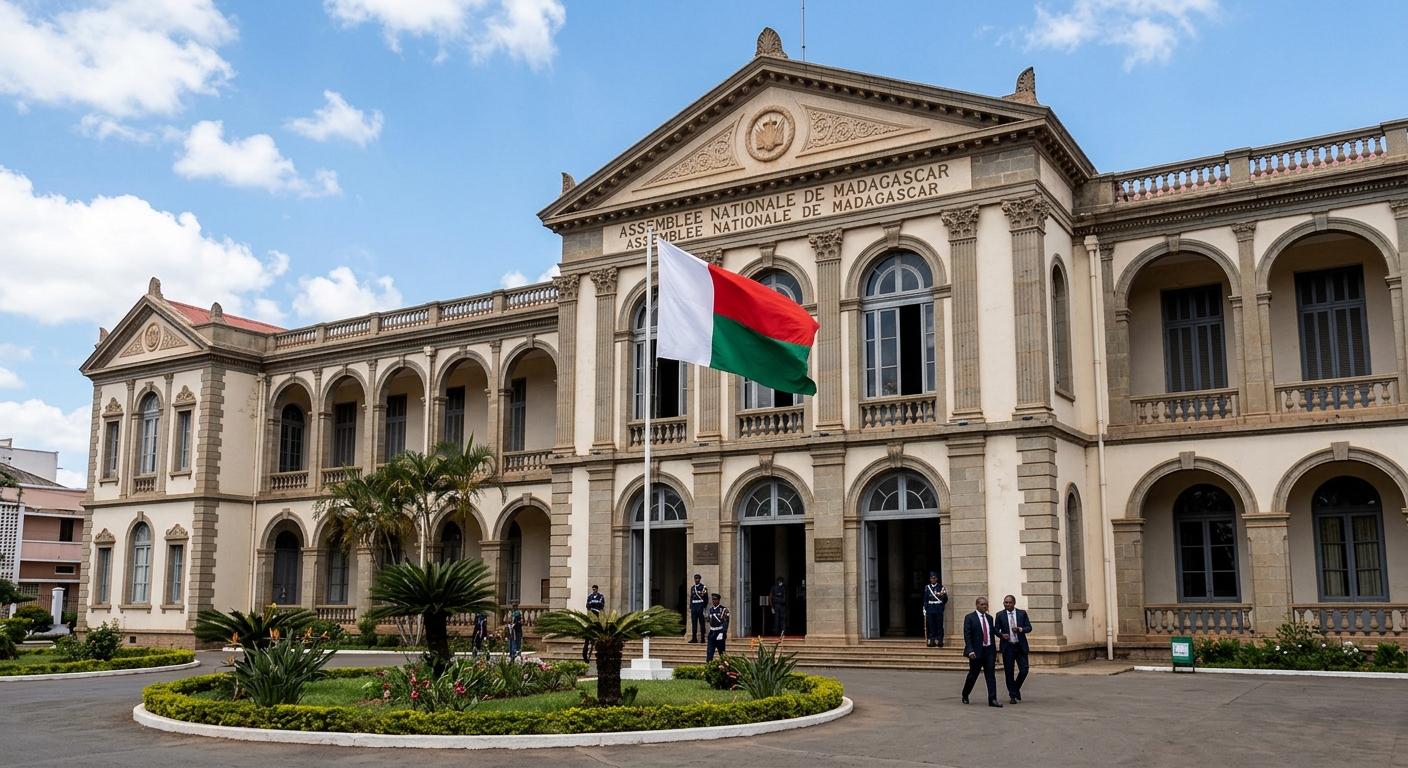
The government of Madagascar has formally submitted Bill No. 019/2026 to the National Assembly, initiating a sweeping legislative effort to modernize the island nation’s gambling framework. Formally deposited in mid-June and currently under parliamentary review, the proposed statute seeks to dismantle unlicensed, offshore gaming channels while establishing centralized state oversight. Spearheaded by the Ministry of Interior and Decentralisation, the reform aims to replace outdated frameworks dating back to 1971 with a unified, transparent legal structure capable of addressing digital gambling, money laundering, and player addiction.
Tiered Categorization and Mandatory Local Server Infrastructure
Central to the legislative proposal is a structured four-tier categorization framework that separates land-based casinos, lottery operations, and digital platforms. Under Category 4, which specifically governs online and network-based gambling, remote operators must satisfy strict operational prerequisites before receiving a time-limited, non-transferable license. Crucially, the draft requires foreign and domestic operators to host primary servers within Malagasy territory. This localized infrastructure mandate is designed to enforce strict technical standards, data privacy compliance, and system security against cyber threats and illegal data extraction.
Centralized State Monitoring via National Gambling Data Platform
To enforce regulatory and financial compliance, the bill establishes a National Gambling Data Platform under the exclusive jurisdiction of the Ministry of Interior. Authorised online operators will be legally required to maintain direct, real-time data connections with the state monitoring network to track gross revenues, tax obligations, and transactional patterns. Failure to maintain server connections or submitting inaccurate player data carries severe administrative penalties, including licence revocation, mandatory ten-year operating bans, and criminal sentences ranging from three months to three years in prison.
Strict Consumer Safeguards and Mandatory AML Standards
The legislation embeds extensive harm-minimization measures into daily operations, establishing 21 as the legal minimum gambling age and requiring operators to verify player identities prior to account activation. Operators must implement mandatory self-exclusion tools, deposit limits, and playing time caps, while credit betting, operator-sponsored loans, and peer-to-peer lending advertisements are strictly prohibited. Concurrently, all licensees must implement rigorous Anti-Money Laundering (AML) and Counter-Terrorist Financing (CTF) monitoring. Unlicensed operators face prison terms of up to five years alongside fines reaching Ar50m (~$11,600 USD), with existing platforms granted a one-year grace period post-enactment to achieve full statutory compliance.
#Madagascar #GamingRegulation #iGamingAfrica #ResponsibleGambling #Compliance #GamingLaw #PublicPolicy #DigitalGovernance #AfricanMarkets

Welcome to Gambling Consulting Authority (GCA) - Your Strategic Partner in Gambling Industry Advancement